Showing posts with label Holland. Show all posts

Wednesday, July 9, 2014

Holland or the Netherlands?

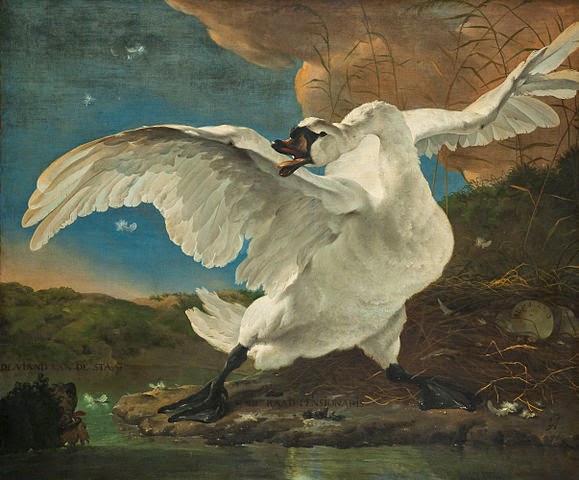
The Threatened Swan by Jan Asselijn (1650)/Wikimedia
While the Dutch football team is prominently part of the 2014 World  Cup, I am continuously being asked : What is the difference between Holland and the Netherlands? What is Holland? Or how do your fellow Dutchmen call their own country?

I have to admit it may be a bit confusing, because both the Dutch and others use the name Holland, L'Hollande, L'Ollanda, but also Nederland, the Netherlands, Les Pays Bas, and Pajais Bass intermittently. 

A brief history lesson for those history buffs among you: the official name of the Netherlands is Kingdom of the Netherlands (in Dutch: Koninkrijk der Nederlanden) or in short the Netherlands (in Dutch: Nederland.) The state of the Netherlands exists in its current form only since 1830, when the current state of Belgium seceded from the United Kingdom of the Netherlands, which in turn then became the Kingdom of the Netherlands. To make things a bit more complicated, in 2013 the Netherlands celebrated its 200th anniversary as Kingdom of the Netherlands, because it was in 1813 that the Dutch Prince of Orange returned to what was then the Kingdom of Holland, at the end of the reign of King Louis Bonaparte, brother of Napoleon, and a country which was essentially part of the French empire. Prince of Orange took first over as "sovereign prince", while in 1815 becoming the first (Dutch) King of the Netherlands, King William I.

So what is then Holland? It is actually

Tuesday, October 15, 2013

Holland on its Way to World Cup in Brazil

Dutch Football Team/2011 Jimmy Baikovicius Flickr
The Dutch football team - or soccer in American parlance - trashed the generally quite strong Hungarians 8-1. Watch and enjoy the multitude of goals scored. Holland on its way to the World Cup in Brazil next summer!


Thursday, September 5, 2013

Major League Basball to the Netherlands?

Apparently Major League Baseball wants to start playing games in Europe, and has chosen Hoofddorp, a small town just outside of Amsterdam in the Netherlands This is not as surprising as it sounds as the Netherlands have achieved impressive baseball results over the years: twenty times European Champion and good results at World Championships. See my previous posts: The Netherlands at the World Baseball Classic and  Dutch Win Baseball World Cup. To a large extent these results have been made possible by a strong presence of players from the Dutch Caribbean islands, some of whom also play or have played in MLB.   However, baseball is a still a very small sport in the Netherlands, with 23,000 members of which half play softball. Compare this to the over one million soccer members, a quarter of million field hockey members, and millions of people skating and cycling. But maybe MLB knowing that Holland has always been a good place for American companies to start their European expansion, would offer a bridgehead for Major League Baseball as well. For a complete report, read Building It, and Hoping the Big Leagues Come in The New York Times.

Thursday, July 11, 2013

World's Shortest Work Week

The Dutch workforce works the least among the world's industrialized nations: it averages 29 hours a week - according to the OECD - with an average annual income of $47,000.

CNN reports that Americans work 38 hours a week at an average annual income of $54,000.

Besides Holland, the other nine countries with shorter work hours than the U.S. are: Denmark (33 hours, $46,000); Norway (33 hours, $44,000); Ireland (34 hours, $51,000); Germany (35 hours, $40,000); Switzerland (35 hours, $50,000); Belgium (35 hours, $44,000);Sweden (36 hours, $38,000); Australia (36 hours, $45,000) and Italy (36 hours, $34,000.) 

It's interesting to follow the ensuing conversation on CNN's website with its usual cliche-driven remarks, such as:

"And then "smart" Americans claim socialism doesn't work! People in these countries all work less, make more and have all kinds of benefits and these are countries doing great economically as well. Let me live in the land of the free, work 60hrs a week for low wages, no vacation and no benefits while being watched by my government. " (by Mbane)

and

"we work a few more hours, yet make substantially more before taxes and a ton more after taxes. yet, somehow a country with a population of Los Angeles is 'better' because they make significantly SIGNIFICANTLY less money than we do on average? what?" (by Virtually Real)

and ""People in these countries are healthier, live longer, live in far better housing,

Tuesday, July 9, 2013

CrowdRoaming: Roaming Innovation from Holland

Bfishadow/Flickr
The European Union just mandated that roaming charges will be lowered for Europeans traveling within Europe (per megabyte of data transfer from 70 euro cents down to 45 cents with a further drop scheduled in July 2014 to push it down to 20 cents; and the cost of calls for both made and received calls, will be going down from 29 cents and 8 cents per minute respectively to 24 cents and 7 cents. Calls from July 1st 2014 will go down to 19 cents per minute outbound, and 5 cents per minute inbound.) 
While this is the result of an interesting mix of deregulation and bureaucratic arm wrestling, in the meanwhile a Dutch start-up, CrowdRoaming, just launched a free Android app, which will enable travellers to tap into local CrowdRoaming users’ smartphone WiFi and surf without costs. This offers the latest example of bringing the sharing economy to consumers. In the end what is more appealing, paying 20 euro cents per megabyte or absolutely zero? The odds are that this Dutch innovation will be beating European Union deregulation.


Tuesday, July 2, 2013

Dutch iPad Schools Seek to Transform Education

"Plenty of schools use iPads. But what if the entire education experience were offered via tablet computer? That is what several new schools in the Netherlands plan to do. There will be no blackboards or schedules. Is this the end of the classroom?" The German weekly Der Spiegel reports on this phenomenon, stating:

"There will be no blackboards, chalk or classrooms, homeroom teachers, formal classes, lesson plans, seating charts, pens, teachers teaching from the front of the room, schedules, parent-teacher meetings, grades, recess bells, fixed school days and school vacations. If a child would rather play on his or her iPad instead of learning, it'll be okay. And the children will choose what they wish to learn based on what they happen to be curious about." The initiator of these iPad schools is Maurice de Hond, a well-known Dutch pollster and digital entrepreneur.

Thursday, November 1, 2012

Holland Offering a Solution for Battling Floods

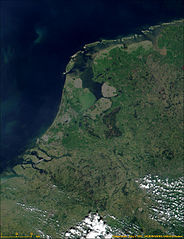
The Netherlands/Wikimedia Commons
Just after hurricane Sandy has struck the Eastern seaboard of the U.S. with a ferociousness and damage to people and property,  only unimaginable a few days before, the first voices are being raised on how to avoid this kind of disaster.

Let's look at the damage sofar: 90 deaths in the U.S., of which 41 in New York City; over 6 million households have been or are still without power; hundreds of homes along the shore damaged or destroyed; the nation's leading subway and railway system which is still not fully in use; and the list goes on and on. The Financial Times reports that "Sandy will rank among the eight most costly storms ever to have struck the US, with losses to the insurance industry of at least $7bn..... The more pessimistic say initial forecasts have a tendency to underestimate the final tally, as was the case with hurricanes Katrina and Irene. One consultancy, PwC, says the total costs to the economy may well reach $45bn." 

Clearly, the first priority is to take care of the victims and repair damage. But what if similar hurricanes would hit again: is there a way to reduce or avoid all together this kind of damage?  Matthew Yglesias  wrote an article in Slate, New Amsterdam May Have To Look Back to the Netherlands To Control Future Flooding where he says: