![]() |
| The Economist |
Tuesday, November 13, 2012
One More Look Back at the Presidential Elections
I believe I've said enough about the Presidential elections, see for example my previous post Obama Win, 50% Not Voting, and Other Trends, but to round it up and offer some final information on who voted how, see this article in The Economist, The Remaking of the President
and the full results of the elections in this interactive CNN overview.
Thursday, November 8, 2012
Obama Win, 50% Not Voting and Other Trends
Election Day came and went. Although in several states such as Ohio and Florida the lines waiting to vote were long and slow moving, there was no major upheaval or contesting voting outcomes as some had expected. President Obama won quite a convincing victory, and although surprising to me that that he won quite early in the evening and relatively easily, it was no surprise to the key pollsters I had referred to in my previous posts Alternatives to the Polling Frenzy and At the Eleventh Hour: Election Polls Revisited.
Intrade was spot on with 303 electoral votes for Obama , so was Nate Silver (who called 50 out of 50 states and had forecast a 91% chance for a Obama win with 313 electoral votes for Obama) and Professor Sam Wang (who had forecast a 99% chance with 332 electoral votes for Obama.)
The results in the Presidential election were as follows:
303 electoral votes for Obama vs. 206 electoral votes for Romney (270 electoral votes needed to win); 60,364,793 Popular Votes (51.2% - O) and 57,776,942 Popular Votes (48.8% - R),
a difference of 2.8 million voters (or approximately 2%) in Obama's favor.
The Senate race resulted in 53 seats for the Democrats (up 2); 45 for the Republicans (down 2) and 2 for the Independents (unchanged.) 51 of 100 votes are needed for majority. The House race resulted in 193 seats for the Democrats (up 7) and 233 for the Republicans (down 2). 218 of 435 seats are needed for majority.
In addition to President Obama's victory, there were some major trends to note:
Intrade was spot on with 303 electoral votes for Obama , so was Nate Silver (who called 50 out of 50 states and had forecast a 91% chance for a Obama win with 313 electoral votes for Obama) and Professor Sam Wang (who had forecast a 99% chance with 332 electoral votes for Obama.)
The results in the Presidential election were as follows:
303 electoral votes for Obama vs. 206 electoral votes for Romney (270 electoral votes needed to win); 60,364,793 Popular Votes (51.2% - O) and 57,776,942 Popular Votes (48.8% - R),
a difference of 2.8 million voters (or approximately 2%) in Obama's favor.
The Senate race resulted in 53 seats for the Democrats (up 2); 45 for the Republicans (down 2) and 2 for the Independents (unchanged.) 51 of 100 votes are needed for majority. The House race resulted in 193 seats for the Democrats (up 7) and 233 for the Republicans (down 2). 218 of 435 seats are needed for majority.
In addition to President Obama's victory, there were some major trends to note:
Tuesday, November 6, 2012
At the Eleventh Hour: the Case for Proposition 37
![]() |
| Sweet Corn/Fairfax County |
"Prop 37 isn’t just a vote for the rights of consumers, although that’s more than enough reason to pass it. Prop 37 isn’t just a vote about the quality of our food, although that’s more than enough reason to pass it. Prop 37 is about voting for transparency in businesses. It’s a vote that tells businesses to meet our needs. It’s a vote for entrepreneurship, innovation, and job and wealth creation. That’s just good business, and it’s why sustainability minded businesses should back Prop 37 on November 6th."
If the case wasn't already clear to support Proposition 37 - see my previous post, GMO, Health & Elections - this editorial will only strengthen it.
At the Eleventh Hour: Election Polls Revisited
![]() |
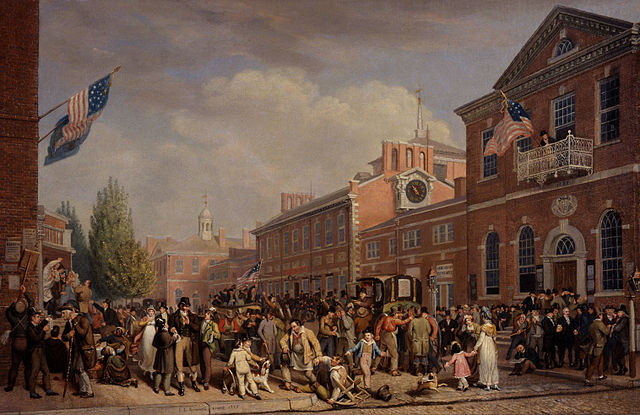
| Election Day in Philadelphia by John Lewis Krimmel 1815 |
First, Intrade: with a 72% chance for a Obama win, and 303 electoral votes for Obama and 235 for Romney (270 electoral votes are necessary for the Presidency.)
Saturday, November 3, 2012
GMO, Health & Elections
![]() |
| Sweet corn/Fairfax County |
Foods that contain GMO have been available in the U.S. since the mid 1990s, and by now approximately 90 percent of the corn, soybeans, rapeseed and sugar beets grown in the United States are GMO. Differently from most other countries, no labeling is required in the U.S. In an article by Francis Moore Lappé and Anna Lappé in the Huffington Post, "Seven Things to Tell Your Friends About GMOs" the writers, experts in food, environment and sustainability, describe seven key points to consider for this referendum about GMOs:
Thursday, November 1, 2012
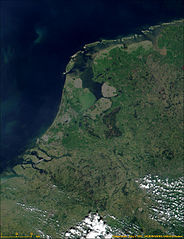
Holland Offering a Solution for Battling Floods
![]() |
| The Netherlands/Wikimedia Commons |
Let's look at the damage sofar: 90 deaths in the U.S., of which 41 in New York City; over 6 million households have been or are still without power; hundreds of homes along the shore damaged or destroyed; the nation's leading subway and railway system which is still not fully in use; and the list goes on and on. The Financial Times reports that "Sandy will rank among the eight most costly storms ever to have struck the US, with losses to the insurance industry of at least $7bn..... The more pessimistic say initial forecasts have a tendency to underestimate the final tally, as was the case with hurricanes Katrina and Irene. One consultancy, PwC, says the total costs to the economy may well reach $45bn."
Clearly, the first priority is to take care of the victims and repair damage. But what if similar hurricanes would hit again: is there a way to reduce or avoid all together this kind of damage? Matthew Yglesias wrote an article in Slate, New Amsterdam May Have To Look Back to the Netherlands To Control Future Flooding where he says:
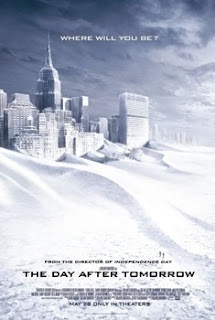
The Day After Tomorrow.....
![]() |
| The Day After Tomorrow/Twentieth Century Fox Film Corp. |
New York Governor Cuomo was quoted in the New York Times this Wednesday, saying:
"“Climate change is reality,” while estimating Sandy’s economic damage up to $6 billion. “Given the frequency of these extreme weather situations that we’ve had — and I believe that it’s an increasing frequency — for us to sit here today and say this is a once-in-a-generation and it’s not going to happen again, I think would be shortsighted.”
In that same article, Klaus Jacob, an adviser to New York City on climate change, who had warned of the certainty of flooded Manhattan highways and tunnels of stranded ed subway riders and subway commuters if the next storm surge topped Irene’s, states:
“I’m disappointed that the political process hasn’t recognized that we’re playing Russian roulette,” said Mr. Jacob."
New York Mayor Michael Bloomberg said:
Subscribe to:
Posts (Atom)